
Hootone Remedies
HOORENOL-C
Best Kidney Treatment
The best approach to assess the health of your kidneys is not to overlook at the level of creatinine in your blood.

Fastest Solution
Easy Steps to Get Your Treatment
Check doctor profile
We hootone Remedies have panel of Experienced Doctors available.
Request consultation
You Can consult our Doctors by an Appointment on Phone or whatsapp.
Receive consultation
Hootone Remedies provide offline and online Services to our patients and provide free consultation.
Get your solution
We have more than 100+ herbal medicine for every disease.
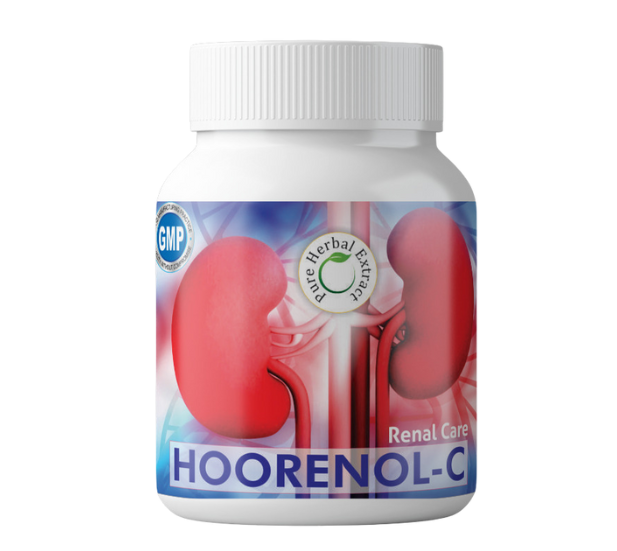
HOORENOL-C
Effective Medicine for Kidney Treatment
- 1) Helps to restore the functions of the kidney nephrons.
- 2) Increase the urine output thereby decreasing the inflammation on face & legs, relieving nausea & feverish conditions within 9 days.
- 3) Helps to increase water fluid intake thereby removing out the blood waste products thus bringing down serum creatinine & blood urea nitrogen in the patients within 1 month.
- 4) The need for dialysis are being reduced and gradually stopped.
- 5) Significantly correct uremia and improve the renal function which is evident by reduction in serum creatinine and other blood parameters.
- 6) Thus helps the patient to live a healthy life without dialysis and kidney transplantation
Learn More
0
Doctors
0
%
Satisfaction
90,
1
Happy Clients
FAQ’s
How do I assess the health of my kidneys?
The best approach to assess the health of your kidneys is not to look at the level of creatinine in your blood. This is so because your age, race, gender, and physical size all have an impact on the amount of creatinine in your blood. Looking at your glomerular filtration rate is the greatest approach to determine if your kidneys are functioning properly (GFR).
GFR is a common lab test that appears on your renal profile. GFR is a calculation that takes into account your creatinine level as well as your age, gender, race, and weight. Your GFR number will inform your doctor if you have renal disease.
You could have kidney disease.
If your GFR has been less than 60 for three months
Over 60 and showing signs of renal disease (having protein in the urine is a sign of kidney damage)
Another important test for assessing kidney function is a urine test. ACR (albumin-to-creatinine ratio) testing will be performed on the urine. The presence of albumin, a type of protein, in your urine is detected by an ACR. Urine albumin levels should be less than 30 mg/g. Even if your GFR is 60, anything above 30 mg/g could suggest kidney disease..
What if renal illness is discovered in me?
What if renal illness is discovered in me?
First, as noted above, examine the kidney function (creatinine and albumin) and determine the cause of the alterations in creatinine and albumin, such as diabetes. Second, what you can do to preserve your health and prevent kidney disease from worsening by changing your diet and taking help of natural supplements.
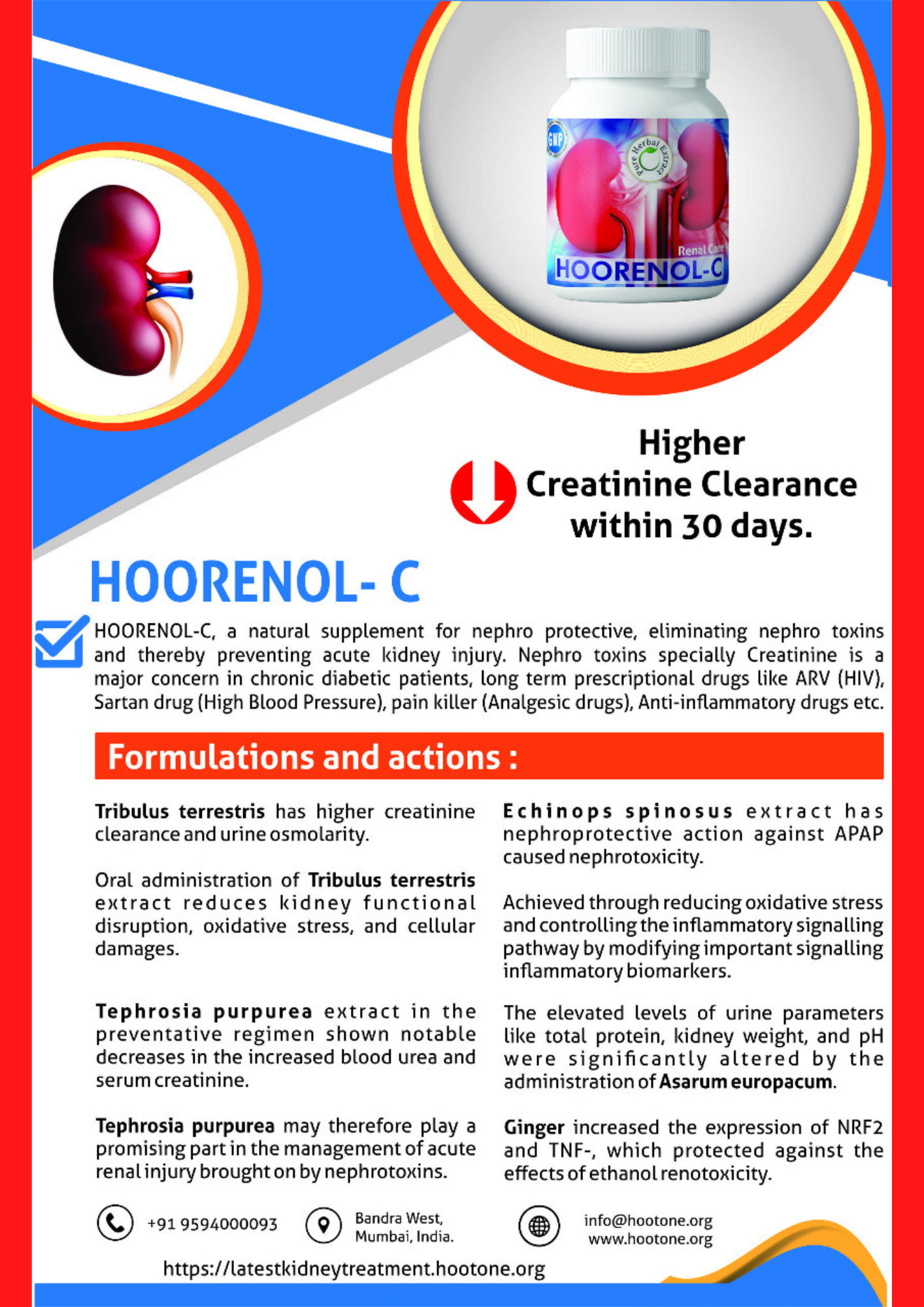
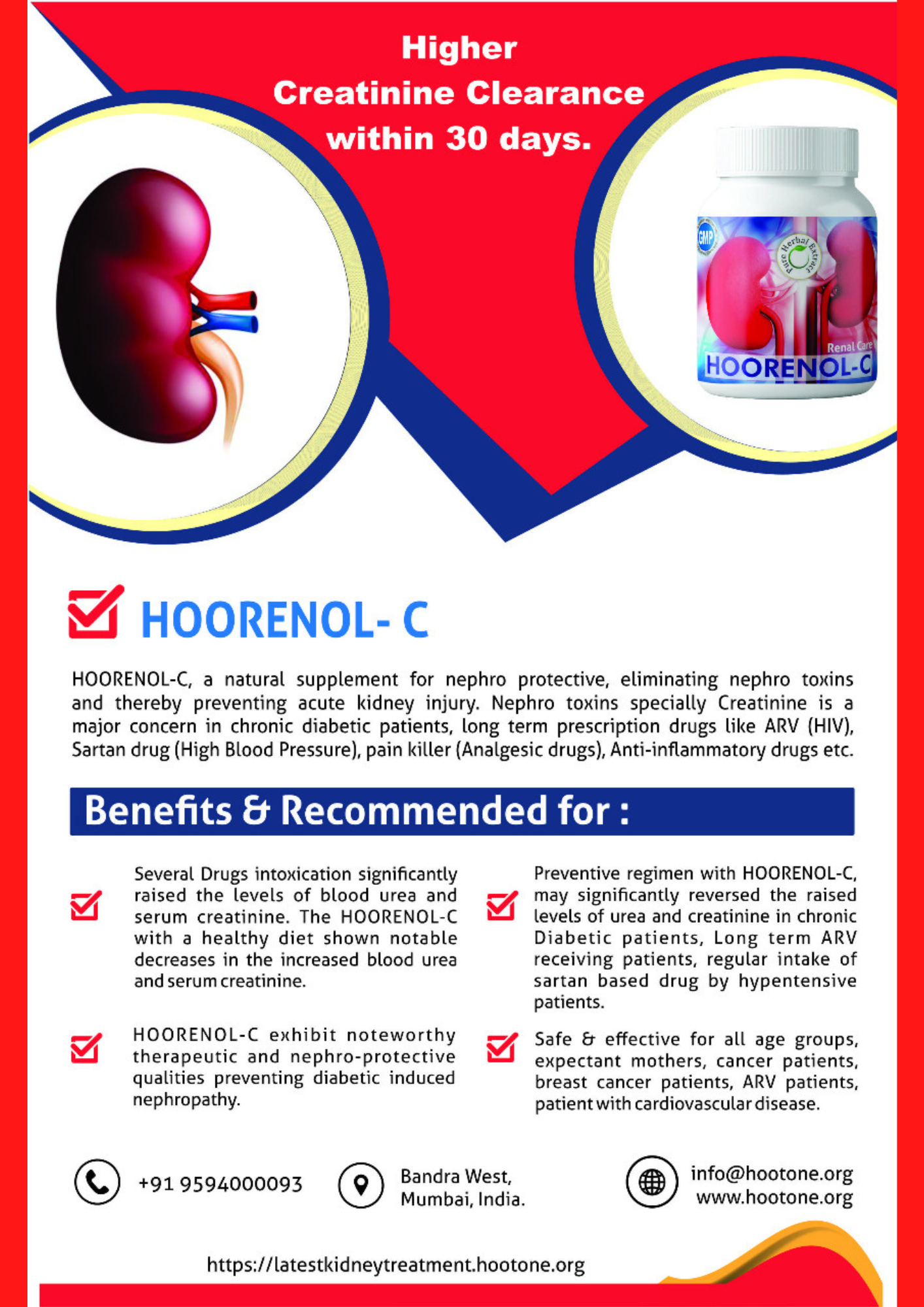
One such Help is available at Hootone, Here you can find HOORENOL C, a nephroprotective combinational herbal extracts that prevents accumulation of nephrotoxin in blood and guards from acute kidney injury.
What does HOORENOL C contains and how it works?
TRIBULUS TERRESTRIS
Following reperfusion, the increase in plasma creatinine and urea nitrogen concentrations was noticeably less pronounced in the Tribulus terrestris group, and their levels equaled those in the other group. In compared to the other group, the Tribulus terrestris group had higher creatinine clearance and urine osmolarity, while the other group had lower salt absolute excretion, fractional excretion of potassium, oxidative stress, and cellular damage.
Following reperfusion injury in rats, oral administration of Tribulus terrestris extract for two weeks can reduce kidney functional disruption, oxidative stress, and cellular damages.
Najafi, H., Firouzifar, M. R., Shafaat, O., Ashtiyani, S. C., & Hosseini, N. (2014). Protective effects of Tribulus terrestris l extract against acute kidney injury induced by reperfusion injury in rats. Iranian Journal of Kidney Diseases, 8(4), 292–298.
ECHINOPP SPP
Echinops spinosus extract has nephroprotective action against paracetamol acetominophen (N-acetyl-p-aminophenol (APAP)) caused nephrotoxicity in rats.
The ability of Echinops spinosus extract to protect the kidney from APAP-induced inflammation may be achieved through reducing oxidative stress and controlling the inflammatory signalling pathway by modifying important signalling inflammatory biomarkers
Hegazy, M. G. A., Emam, M. A., Khattab, H. I., & Helal, N. M. (2019). Biological activity of Echinops spinosus on inhibition of paracetamol-induced renal inflammation. Biochemistry and Cell Biology, 97(2), 176–186. https://doi.org/10.1139/bcb-2018-0212
TEPHROSIA PURPUREA
In comparison to the usual control, gentamicin intoxication significantly raised the levels of blood urea and serum creatinine. The extract (200 mg/kg of Tephrosia purpurea) in the preventative regimen shown notable decreases in the increased blood urea and serum creatinine.
According to the research, Tephrosia purpurea leaf ethanol extract has significant nephroprotective and curative properties without being harmful. Antioxidant action, the prevention of an excessive NO generation, and the regulation of Cox-2 expression are the suggested mechanisms for the claimed activity.
The presence of phenolics and flavonoids like rutin and quercetin may be responsible for these actions. Tephrosia purpurea may therefore play a promising part in the management of acute renal injury brought on by nephrotoxins like gentamicin.
Jain, A., Nahata, A., & Singhai, A. K. (2013). Effect of tephrosia purpurea (L.) pers. leaves on gentamicin-induced nephrotoxicity in rats. Scientia Pharmaceutica, 81(4), 1071–1087. https://doi.org/10.3797/scipharm.1302-09
TEPHROSIA PURPUREA
T. Purpurea prevented N-diethylnitrosamine-initiated and KBrO3-promoted renal oxidative stress and toxicity at doses of 5 mg/kg body weight and 10 mg/kg body weight.
According to research, T purpurea can effectively reduce renal oxidative stress and carcinogenesis brought on by N-diethylnitrosamine and KBrO3, in addition to acting as a skin antioxidant.
Khan, N. (2001). Tephrosia purpurea ameliorates N-diethylnitrosamine and potassium bromate-mediated renal oxidative stress and toxicity in wistar rats. Pharmacology and Toxicology. https://doi.org/10.1034/j.1600-0773.2001.880602.x
A considerable increase in blood urea and serum creatinine compared to the control group’s normal values, was brought about by gentamicin intoxication in the study. The T. purpurea extract (200 mg/kg) significantly decreased the increased blood urea and serum creatinine in the preventative regimen.
Without being hazardous, Tephrosia purpurea leaves exhibit noteworthy therapeutic and nephroprotective qualities.
Jain, A., & Singhai, A. K. (2009). Effect of Tephrosia Purpurea Pers on Gentamicin Model of Acute Renal Failure. IFMBE Proceedings. https://doi.org/10.1007/978-3-540-92841-6_355
TEPHROSIA PURPUREA
extracts shown nephroprotective efficacy against arsenic-induced toxicity.
Gora, R., Kerketta, P., Baxla, S., Toppo, R., Prasad, R., Patra, P., & Roy, B. (2014). Ameliorative effect of Tephrosia purpurea in arsenic-induced nephrotoxicity in rats. Toxicology International. https://doi.org/10.4103/0971-6580.128807
ASARUM EUROPAEUM
The elevated levels of urine parameters like total protein, kidney weight, and pH were significantly altered by the administration of Asarum europacum at doses of 200 mg/Kg and 400 mg/Kg, and the raised levels of urea and creatinine were significantly reversed.
Srilakshmi Mamillapalli, Pavan Chand Akkiraju (2015). A Study on Nephroprotective and Antiurolithiasis activities of Ethanolic Extract of Asarum europaeum Leaves against Gentamicin Induced Nephrotoxicity in Wistar Rats
ZINGIBER OFFICINALIS
Ginger increased the expression of NRF2 and TNF-, which protected against the effects of ethanol renotoxicity.
Fathi, R., Akbari, A., Nasiri, K., & Chardahcherik, M. (2021). Ginger (Zingiber officinale roscoe) extract could upregulate the renal expression of NRF2 and TNFα and prevents ethanol-induced toxicity in rat kidney. Avicenna Journal of Phytomedicine, 11(2), 134–145. https://doi.org/10.22038/AJP.2020.16496
Our Professional Advice

Analyse your Health Conditions
Learn more

Know your Risk Calculation
Learn more

Subscribe for kidney health Forum
Learn more

Combines 4 Way Action Therapy
Learn More
The Kidneys

Functions
Learn More

Warning Sign
Learn More

Testing
Learn More

Causes
Learn More
BROCHURES
Change your life
It’s Time to Change Your Life Today
Get a Quote Now!
[contact-form-7 id=”73″]